
Peafowl Mitigation Program
Peacocks are both a beloved and frustrating part of life in Pinecrest. The Village has a humane program to manage the population, and we want to make sure you have all the information you need. Whether you want to request a trap, learn about the science behind the program, or just share your experience, this is your one-stop page.
How It Works
Pinecrest's peafowl are protected under County regulations, which means permanent relocation is not an option. In September 2023, at the direction of the Village Council, the Village launched a first-of-its-kind humane sterilization program in partnership with Dr. Don J. Harris, a renowned avian veterinarian, and Redline Iguana Removal, the Village's trapping contractor. Rather than remove or euthanize the birds, the program uses minimally invasive surgical techniques that allow peafowl to remain in the community while preventing reproduction.
The Trapping Process
- Request a Trap. Residents who have peafowl on their property may submit a trap request to the Village.
- Sign the Right-of-Entry Agreement. The Village sends the property owner a standard Right-of-Entry Agreement, which grants the trapping contractor permission to access the property for scouting and trapping. Once the signed agreement is returned to the Village, the request moves forward.
- Scouting and Trapping. Redline Iguana Removal visits the property to scout peafowl activity and sets humane traps to safely capture the birds.
- Veterinary Examination and Treatment. Captured birds are transported to Dr. Harris for examination. Male peacocks receive an endoscopic vasectomy, and female peahens receive an endoscopic tubal ligation. Both procedures are performed under anesthesia and require no aftercare.
- Recovery and Release. Birds recover for three to four days before being released back into the community, each fitted with a colored ankle band.
What the Bands Mean
- Yellow Bands: These females have been sterilized.
- Orange Bands: These females have been examined but not yet treated. Seeing chicks with them is expected for now.
- Blue Bands: These are the "honorary bachelors," males that have been humanely vasectomized.
Ever wonder why you still see nests despite the Village’s sterilization efforts? It is actually by design. The vasectomies do not stop egg-laying. In fact, we want the mates of our sterilized males to lay as many eggs as possible.
This creates "infertile nests," which keep those females busy and prevent them from seeking out the un-vasectomized males who might still be roaming the Village. While Pinecrest hasn't reached every bird yet, the goal is to make seeing new chicks the exception rather than the rule in our neighborhoods.
By understanding the science behind the "infertile nest," we can work together toward a sustainable population that balances our love for nature with our quality of life.
Of the 638 birds examined as of May 27, 2026, there have been zero incidents of morbidity or mortality. This approach requires patience. Like feral cat programs nationwide, results build over breeding seasons. The Village Council reviews the program regularly and will determine when the population has been sufficiently reduced.
Legal Framework
This program operates under Miami-Dade County Code Section 5-16, which regulates the handling of peafowl in Miami-Dade County. Originally adopted in 2001, Section 5-16 prohibited the taking of peafowl except under limited circumstances. In 2022, the County amended the code to allow municipalities to opt out by adopting a peafowl mitigation plan that provides for humane removal, provided the plan is also approved by the Board of County Commissioners.
Pinecrest’s Peafowl Mitigation Policy was approved by Village Council Resolution 2023-52 and subsequently by the Miami-Dade Board of County Commissioners in November 2025. The County also approved a similar mitigation policy for unincorporated District 12 areas, reflecting the region’s shared approach to humane population management.
For more details, see Miami-Dade County Code Section 5-16 (Miami-Dade Peacock Ordinance).
-

Email peacock@pinecrest-fl.gov
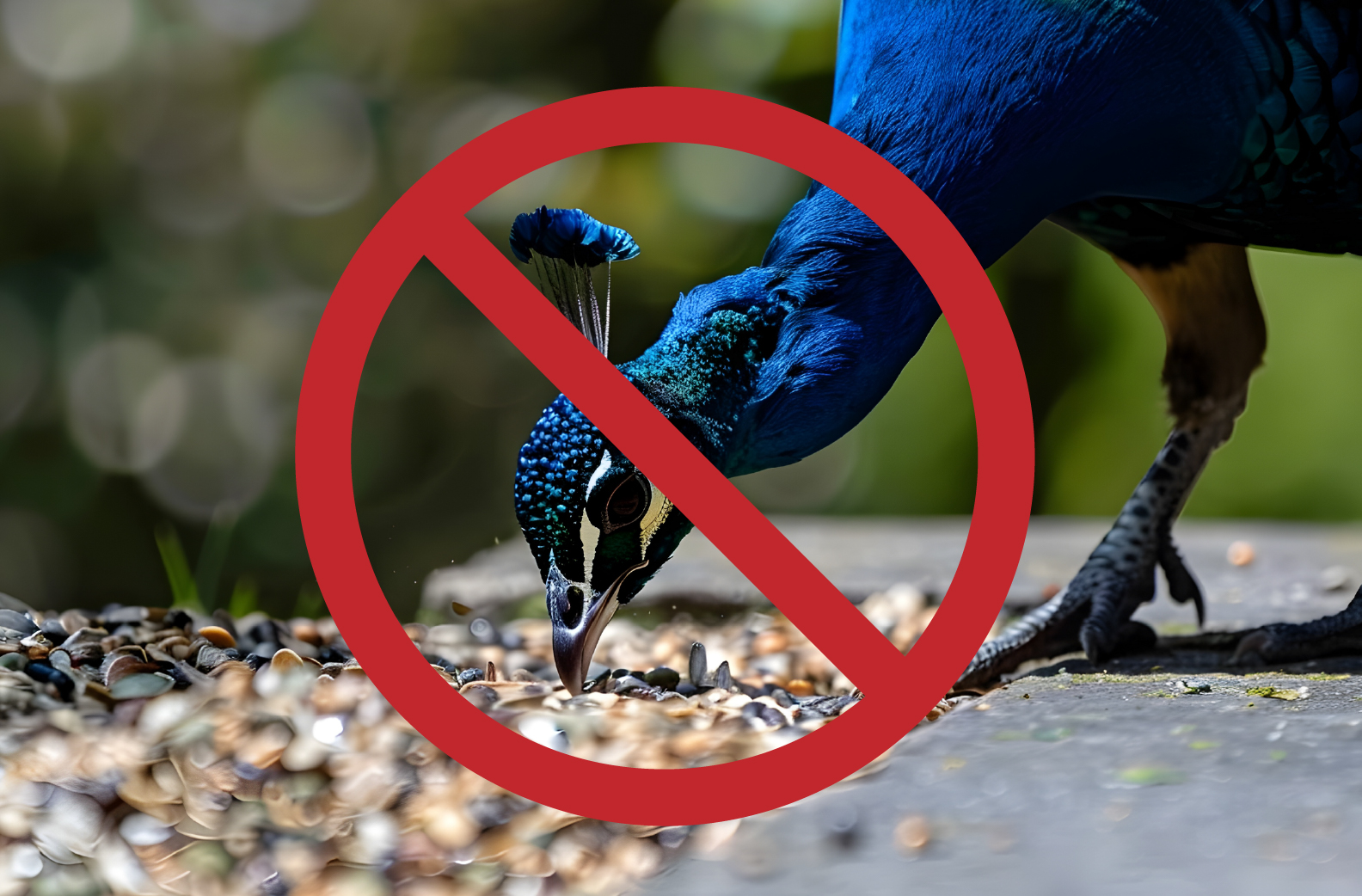
Feeding the peacocks, even with good intentions, violates municipal code, disrupts the birds' natural behavior and makes the program harder to carry out. By not feeding them, you help ensure they enter our humane traps, allowing our veterinary team to continue their work.
If you see peacocks being fed in your neighborhood, you can let us know by emailing codecompliance@pinecrest-fl.gov. Every report helps us reach residents who may not yet be aware of the ordinance or understand how feeding affects the birds' wellbeing. Our first priority is education and outreach.


